The origin story of Made For Rest
This summer, for the first time in four years, all three of our stays are rented at the same time.
Normally, that would have meant packing another suitcase. For years, every booking meant moving our lives somewhere else. We’d lock away our belongings, pack what we needed, and settle into whichever place happened to be home that week. Sometimes it was an Airstream. Sometimes it was a tiny house. Sometimes, if there was a gap between guests, we’d move back into the very house we had just rented.
This year, when our guests arrived, we stayed home. And sitting in that quiet, it finally hit us: we had spent years creating places where other people could rest while slowly forgetting what it felt like to have a place of our own.
That realization wasn’t the beginning of Made For Rest. It was simply the moment we found the words for a journey we were already living.
This is that story. And we want to say up front: it isn’t one with a tidy ending. We’re still in the middle of figuring this out. But at some point, “figuring it out” became a way of life we wanted to share, not just something we were trying to survive.
The Trip That Changed Everything
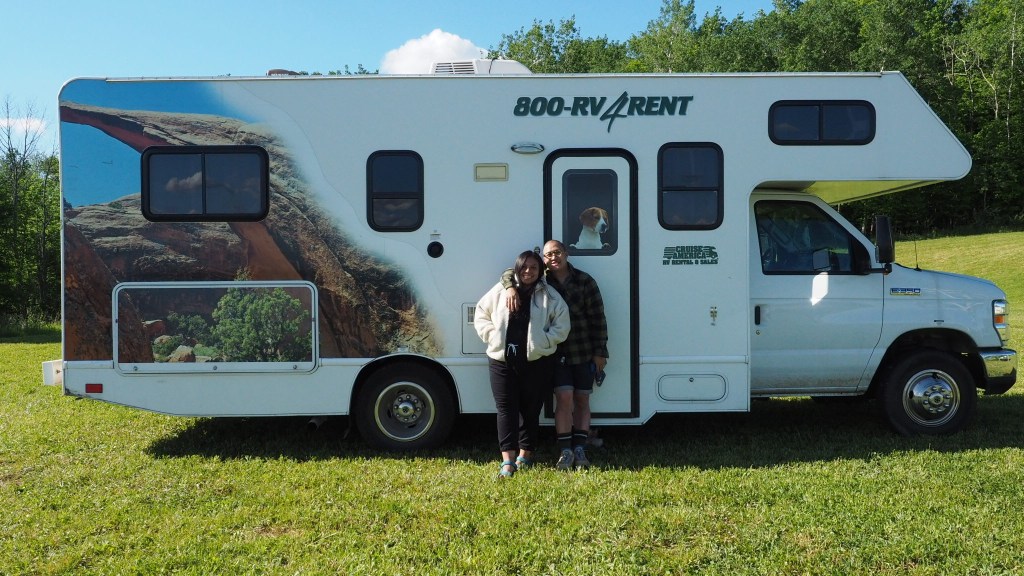
In the summer of 2020, the world felt like it had stopped. Alma and I were supposed to get married that year. Instead, we found ourselves in our Brooklyn apartment, surrounded by uncertainty, wondering what life would look like next.
We could have stayed put. Instead, we rented an RV.
At the time it felt spontaneous, but if we’re being honest, the idea had been living somewhere inside us for years: van life, camping, the simplicity of waking up somewhere new. COVID didn’t create that dream. It simply gave us permission to chase it.
For nearly a month, we worked remotely while traveling through New York and New England. Weekdays we’d stay somewhere with enough internet to do our jobs; weekends we’d intentionally disappear into places where we could unplug. Something in us was changing, even if we couldn’t yet say how.
One weekend brought us to Wandering Acres, a hundred-acre property outside Bath, New York. Not a traditional campground, just a beautiful piece of land where travelers could park, slow down, and disappear into nature for a few days. We parked on top of a hill overlooking fields that stretched toward a distant tree line, sites spread so far apart it felt like we had the whole property to ourselves. It was quiet. The kind of quiet that almost catches you off guard when you’ve spent your whole life hearing something.
That evening we built a fire in a cauldron-style pit and cooked dinner outside, no real plan, just adding another log because there didn’t seem to be any reason to go back into the RV. As the sky darkened, something slowly appeared above the trees.
It kept rising, enormous and deep red, not the pale white either of us expected.
Alma looked at me. “I’ve never seen the moon like that before.”
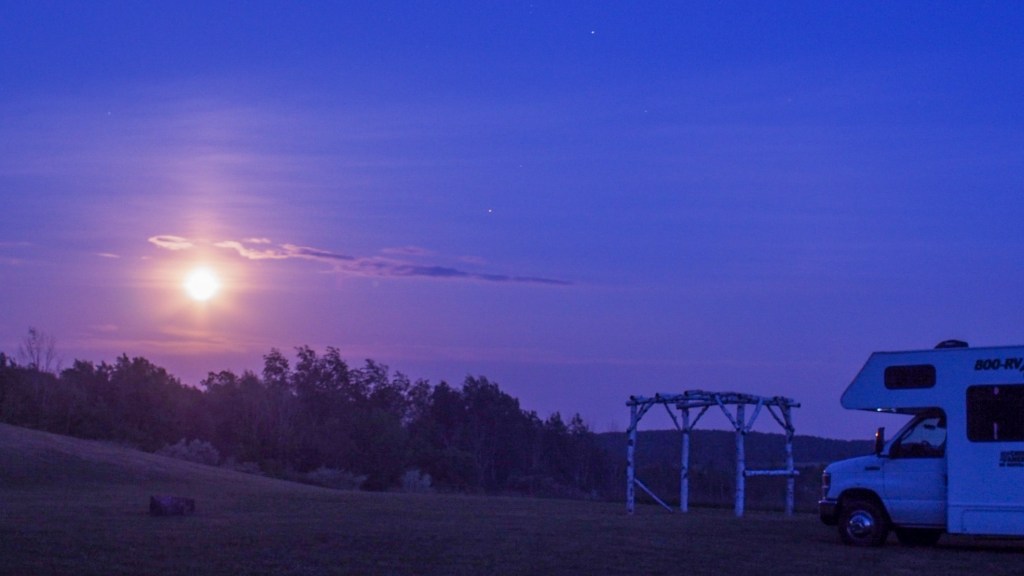
Neither had I. We didn’t know it yet, but we were watching the Strawberry Moon rise over the tree line. Growing up in New York City, I don’t know that I’d ever really seen the moon before. Maybe the buildings were too tall, maybe the lights drowned it out, or maybe I’d simply been too busy to notice. Whatever the reason, it felt like the first time. We sat there in silence and watched it climb until it lit up the fields around us.
I don’t think the moon changed us. It simply revealed something we’d been too busy to see.
As we kept traveling, we found ourselves gravitating toward the Finger Lakes, specifically Keuka Lake, on a recommendation from someone who’d mentioned it in passing. We wandered quiet roads, discovered small towns we’d never heard of, and stumbled onto landscapes that made us feel strangely at home. At first we’d scroll through listings the way people browse vacation homes they’ll never buy: “look at this one,” “can you imagine waking up here.” But after the Strawberry Moon, something shifted. Alma stopped talking about the Finger Lakes like a place we’d visit again someday.
What if we lived here?
Not someday. Now.
She had always been the one willing to imagine a different life before there was any proof of it. I wanted it too. I was just quieter about it. I remember telling her one of my biggest fears: “What happens if I ever lose my job?” My whole career had been built in New York City. It was the only professional world I’d ever known. Would there be another opportunity waiting in a small town? I couldn’t shake the thought.
Alma didn’t dismiss the fear or tell me I was overthinking it. She simply believed we’d figure it out.
I thought I was worried about geography. In reality, I was worried about identity. I wasn’t afraid of leaving Brooklyn. I was afraid of leaving behind the version of myself I understood. Alma saw possibility. I saw the risk standing right beside it. Neither way of seeing the world is better; together, they’ve shaped almost every meaningful decision we’ve made since.
Building Our First Home
One week after returning to Brooklyn, we drove back to the Finger Lakes to see a house, not because we had a business plan, but because something about it felt like the life we’d just experienced. Before the RV trip, six acres sounded overwhelming to me. By the end of it, fifty sounded exciting.
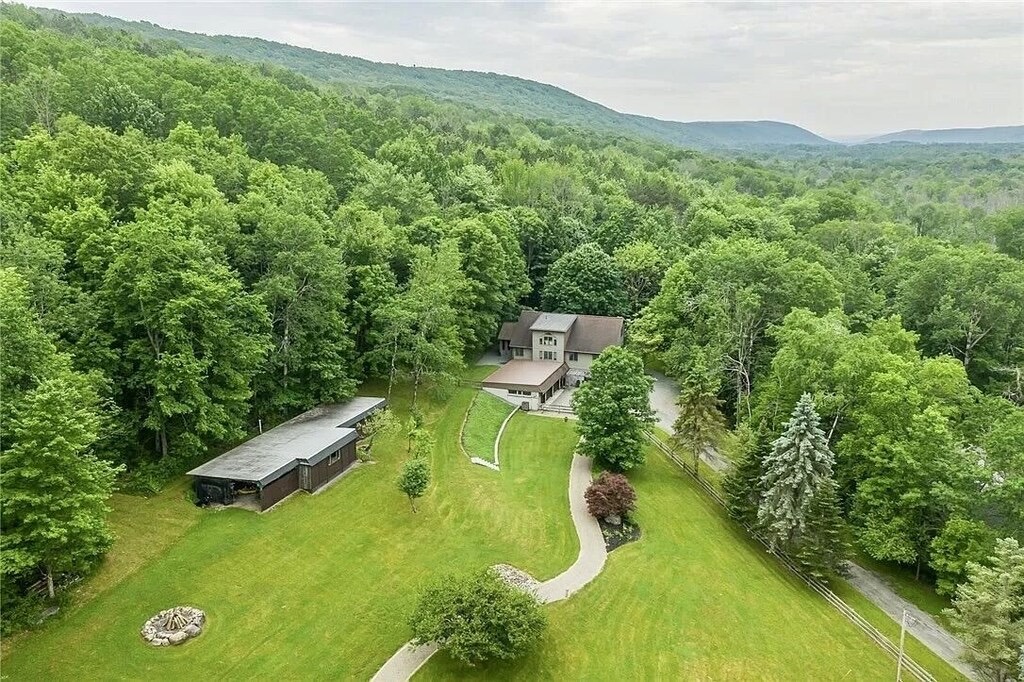
The house sat tucked between two state forests, more land than either of us had ever imagined owning. Woods, a pond, quiet, space to breathe. I remember thinking that if I was going to leave what I still believe is the greatest city in the world, I needed a place that would make people understand why.
Inside were little details left by the previous owner: a photo of the dog breed we’d always dreamed of owning, souvenirs from Costa Rica, the same country where I’d proposed. Alma noticed them before I did, smiling every time, as if the house had been leaving us reminders. It wasn’t that we believed in fate. It was that we’d finally become present enough to notice things we probably would have walked past before.
Then we walked down to the pond. There’s still a video from that day where you can hear me say, “It can’t get better than this.”
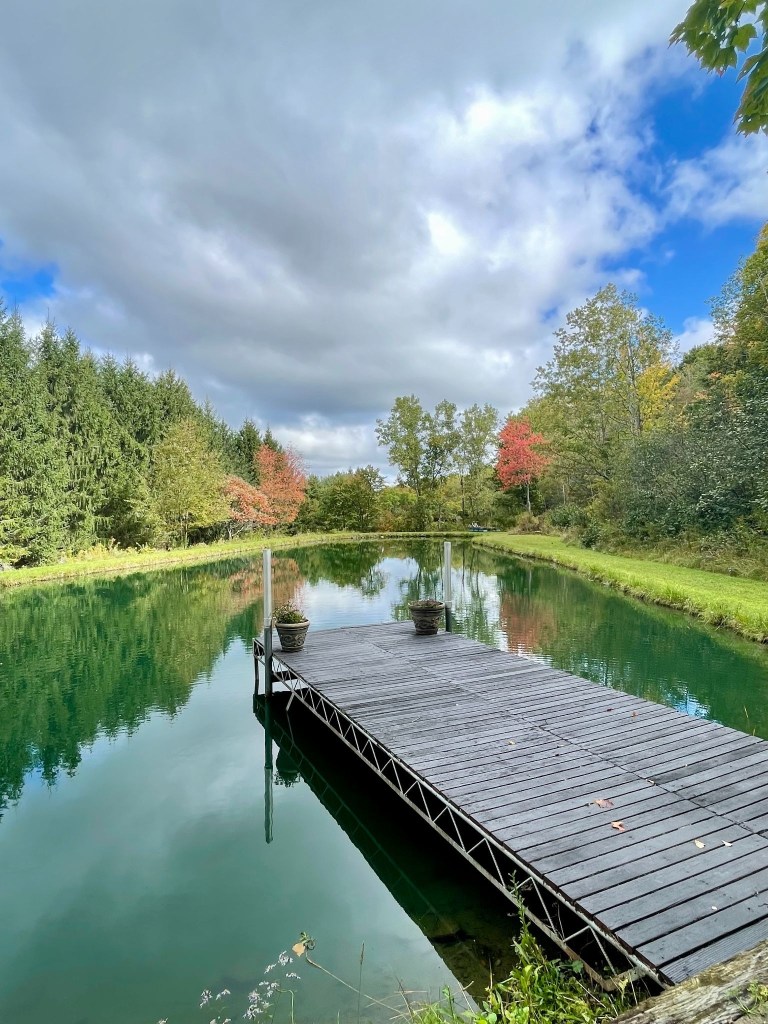
We didn’t look at each other and say this is the one. We didn’t need to. Somewhere between Alma’s certainty and my hesitation, we both knew. Not that we’d found a perfect house, but that we’d found the backdrop for the life we wanted to build together.
We bought The Young Estate in October 2020. Neither of our families had ever owned a home. We weren’t escaping Brooklyn. It shaped us, taught us resilience and ambition. We just weren’t looking for a different city anymore. We were looking for a different pace.
Our first weeks as homeowners were anything but glamorous. We’d both grown up renting apartments in New York, where electricity is simply on. So when we unlocked the front door for the first time, there was no power. We’d never transferred the service into our name, and mid-COVID, getting it turned back on wasn’t quick.
No pump meant no water meant no toilets, no showers, no sinks. We charged devices in the car during grocery runs and poured jugs of cold water over each other’s heads to wash our hair. For nearly two weeks. It was our crash course in what it actually means to live in the rural Finger Lakes.
I kept telling myself I could endure almost anything. Alma has a way of knowing when it’s time to stop enduring and start changing the situation. “I’m calling NYSEG,” she finally said. She’d reached her limit; mine was apparently much higher. That’s one of the quiet differences between us, and it served us well. Those weeks taught us how resourceful we could be, and how much we could get through together.
Once life settled, our days became wonderfully ordinary: coffee while walking Jake and Brooklyn off leash across the fifteen acres surrounding the house, lunch by the pond, evenings outside long after dinner because neither of us felt any urgency to go back in. We thought the house was teaching us how to slow down. I think slowing down simply created enough space to notice what had always mattered.
Opening Our Doors
Airbnb wasn’t part of the original plan. It entered our lives during one of the hardest seasons we’d been through.
Not long after we married, bought the house, and moved out of the city, I found myself struggling with depression. From the outside it made no sense. On paper, everything was coming together. Internally, it felt like I was unraveling. Looking back, I don’t think it appeared out of nowhere; I think it had been living beneath the surface for a long time, and this was just the first time I couldn’t outrun it. For the first time in my life, the career I’d built my identity around no longer felt certain, and I realized I wasn’t only afraid of losing my job. I was afraid of losing the role that had always told me who I was.
That’s when short-term rental came back into focus. Alma had believed in it long before I did. Her sister was already hosting, and she’d mention it now and then. I wasn’t ready to hear it. During that season, she didn’t try to convince me. She simply believed there was still a way forward, even when I couldn’t see it myself.
For me, short-term rental became something else: a project, a creative outlet, a way to keep building when I no longer knew who I was professionally. We didn’t say yes because we had all the answers. We said yes because we believed we could figure it out together.
Our first season felt like one long experiment: photographing every room, organizing kitchen drawers, hanging artwork, asking ourselves again and again, if we were staying here, what would make us feel at home? Every booking felt exciting. Every review felt like proof we were creating something people genuinely appreciated. Guests celebrated anniversaries there, birthdays, family vacations. Memories that had nothing to do with us, made in a place we’d poured ourselves into.
What we didn’t realize yet was that opening our home also meant learning how to leave it. Every reservation meant packing our clothes, our toiletries, all the little things that make a place feel lived in: straightening the blankets, clearing the counters, locking the door behind us on our way out.
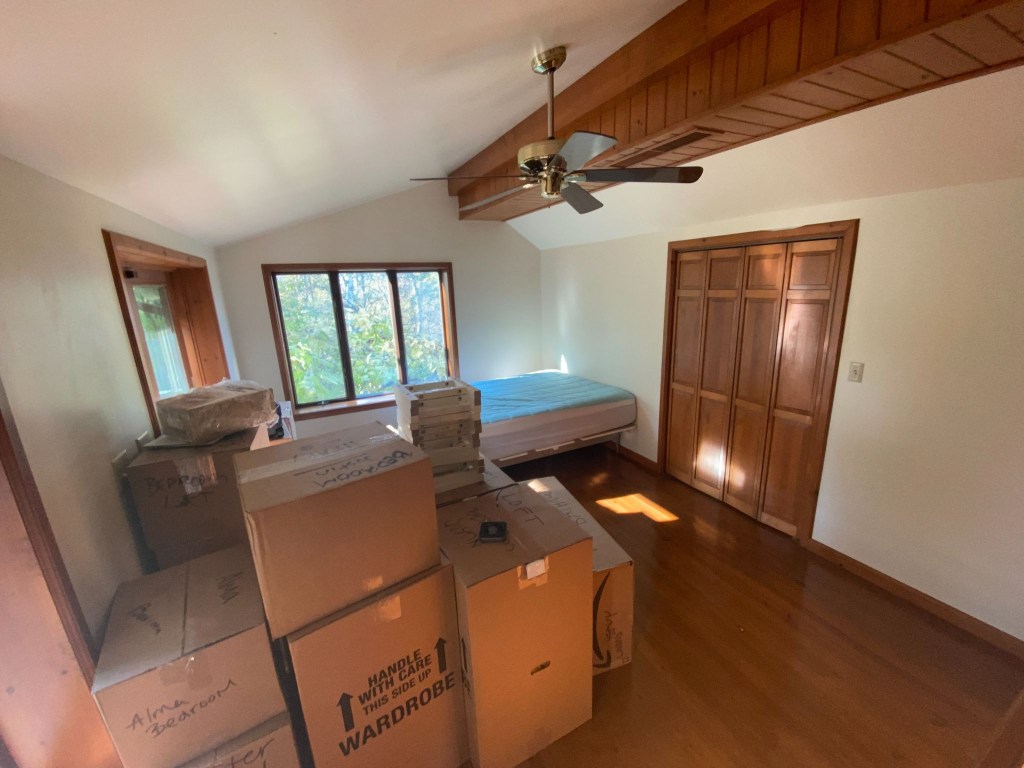
Our first guests checked in over Memorial Day weekend, and we were still moving boxes out that same afternoon. We didn’t have the Airstream site ready yet, so instead of roughing it, I surprised Alma with a hotel in Geneva. The moment we walked in, I could almost see the weight leave her shoulders. We told ourselves it was because we needed a comfortable bed. I think it was something more. For a night, neither of us had to think about being hosts. No check-in messages, no preparing for the next guest. Just a bed, a bathroom, a door we could close. We were searching for something we didn’t have words for yet. Not another house, just a place where we didn’t have to share our own.
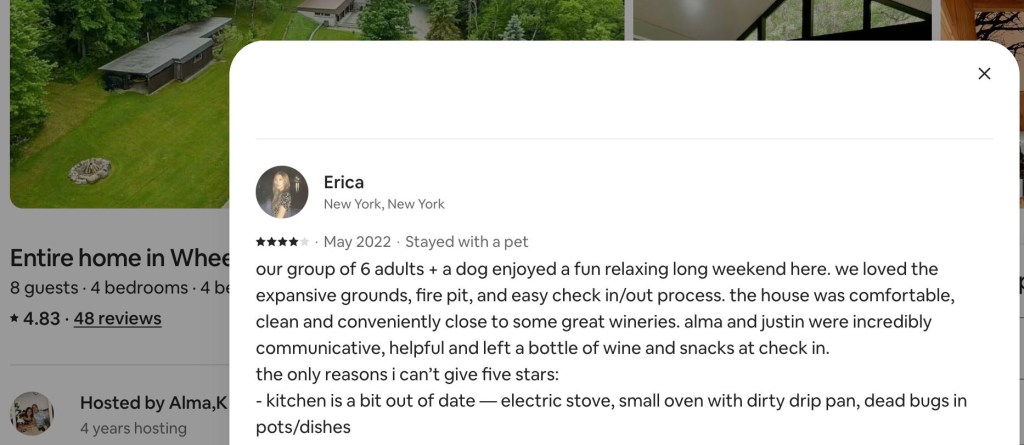
Our first review wasn’t perfect. I’d accidentally put old pots from the barn into the kitchen cabinets, and when the guests opened them, dried bugs fell out. Humbling, embarrassing, and one of the best lessons we could have gotten: hospitality isn’t about perfection. It’s about learning. Being a homeowner is about taking care of a house. Being a host is about taking care of the people who step inside it.
When Adventure Asked for More Than We Expected
Every opportunity asks something of you. At first, we didn’t fully understand what ours would require.
Each time The Young Estate was booked, we’d move into our Airstream; when there was a gap, we’d move back. The first few years genuinely felt like an adventure. We built the site ourselves: the pergola, the fire pit, the pool, the seating area, every little detail became something we created together. There wasn’t much space, but it never felt like we were missing anything. Home wasn’t measured in square footage yet. It was measured by whether we were together. We named that little corner of the property Jake’s Lane, in his memory. He’d claimed it as his own long before it became ours.
By our second season, we’d learned we didn’t have to pack up the whole house for every reservation. We chose one walk-in closet and decided that would become our space: our favorite mugs, the framed photos we didn’t want boxed away, the blanket we’d curl up under at night. When guests stayed, we locked the door. It was the only room that still looked like we lived there.
At the time it felt like a practical decision. Just another system that made turnovers easier. Looking back, our life had condensed into one room inside another home. Eventually we started buying two of everything, one for guests and one for us. It felt wasteful at first, but I think we were really just trying to recreate the feeling of home wherever we happened to be living that week. We weren’t just sharing our house anymore. Without quite noticing, we had become visitors inside it.
We told ourselves it was temporary. It was. Until life entered a new season.
When Penelope was born, everything changed, not because she made the adventure harder, but because she helped us see it differently. That following season, we lived full-time in our 336-square-foot Casita while The Young Estate stayed booked. On paper, it made perfect sense. For two people, the Casita had felt cozy. For three, every square foot suddenly mattered. No separate bedroom, no office, nowhere to go when someone needed quiet.
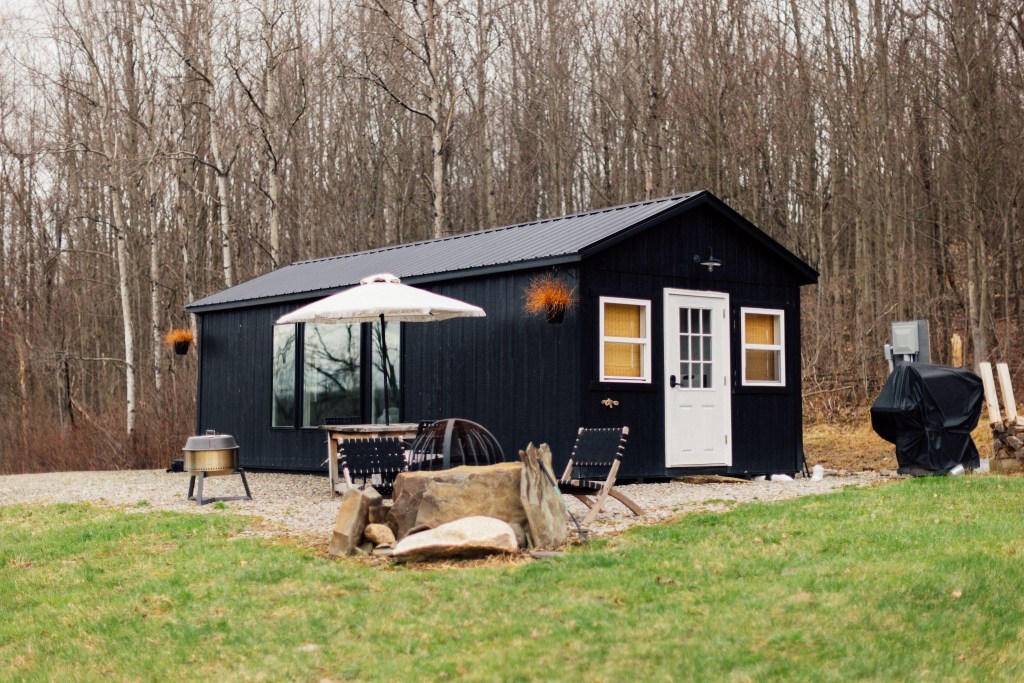
One memory comes back to me more than any other. Alma’s work calls had to be completely private, and the bathroom was the only room with a door, so she’d take her laptop in and start her meeting. From the other side of the door, we’d hear Penelope calling for her. Sometimes sitting outside waiting, sometimes scratching at the door with her tiny hands, sometimes crying because she just wanted her mom. Alma heard every bit of it. She never stopped being present. She was just trying to be two people at once.
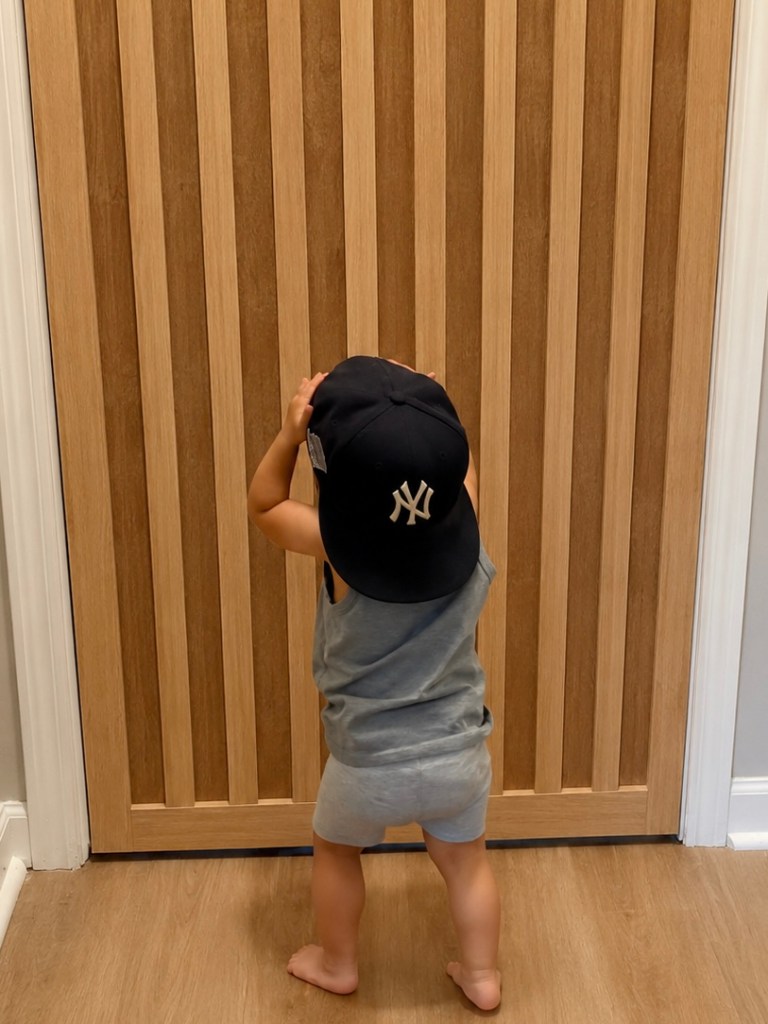
For years, we hadn’t just accepted the sacrifices that came with this life. We’d embraced them. We moved between homes, packed and unpacked, lived small, adapted. As long as we had each other, we believed we’d figure it out. And we did. But becoming parents has a way of changing the questions you ask. We stopped asking can we do this? and started asking:
Should Penelope have to?
The space hadn’t changed. Our season had.
Finding Home Again
Moving to Webster, NY wasn’t giving up on our dream. It was protecting it.
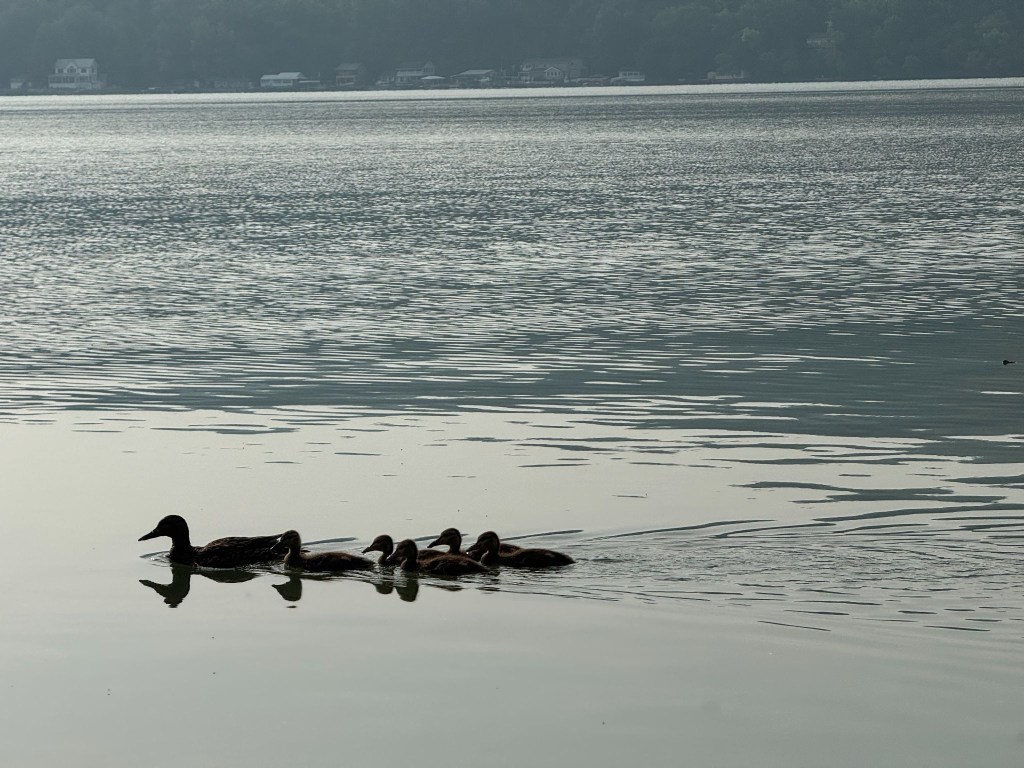
We searched for months: Corning, Canandaigua, Fairport, Pittsford, Henrietta, Rochester, looking for the convenience of everyday life without losing the connection to nature that had changed us. We found it in a townhouse where our balcony overlooks trees, wildlife, and water, five minutes from groceries, playgrounds, restaurants, libraries.
The first few nights weren’t glamorous. I was still hauling boxes and furniture by myself. But something felt different. For the first time in years, we unpacked, not because guests were arriving next week, but because it was finally ours to live in. We took our time painting accent walls, choosing colors, adding trim. I thought we were decorating. I think we were really just creating spaces that belonged to us again.
One night, not long after we moved in, I walked over and closed our bedroom door. Then I stopped, because I realized we hadn’t had a bedroom door in years.
At The Young Estate, our bedroom had been an open loft. We loved it, and when it was just the two of us we never thought twice about it. Then Penelope’s bassinet sat beside our bed in that same open loft. When we started renting the house, we moved into the Airstream. No door there either, just a curtain we’d jokingly slide shut when one of us was frustrated, pretending it was a slam. Then came the Casita: one room, one bathroom, three people. Still no door.
And then, almost without thinking about it, we arrived in Webster. For the first time in years, Penelope had her own room. Not a corner of a room, not a bassinet beside our bed. Her own room. Alma and I had ours too. With a door.
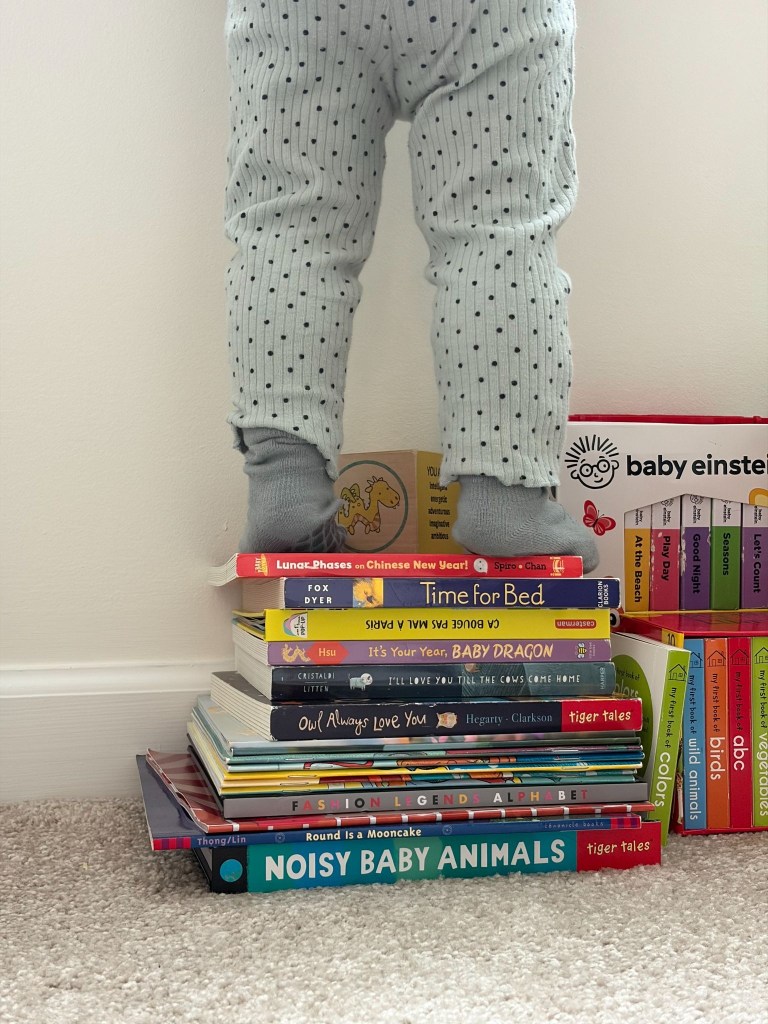
It sounds almost ridiculous to say out loud. But in that moment I understood how much those ordinary things matter: a room, a little privacy, a place where you can leave your favorite mug on the counter and know it’ll still be there tomorrow.
What Made For Rest Means
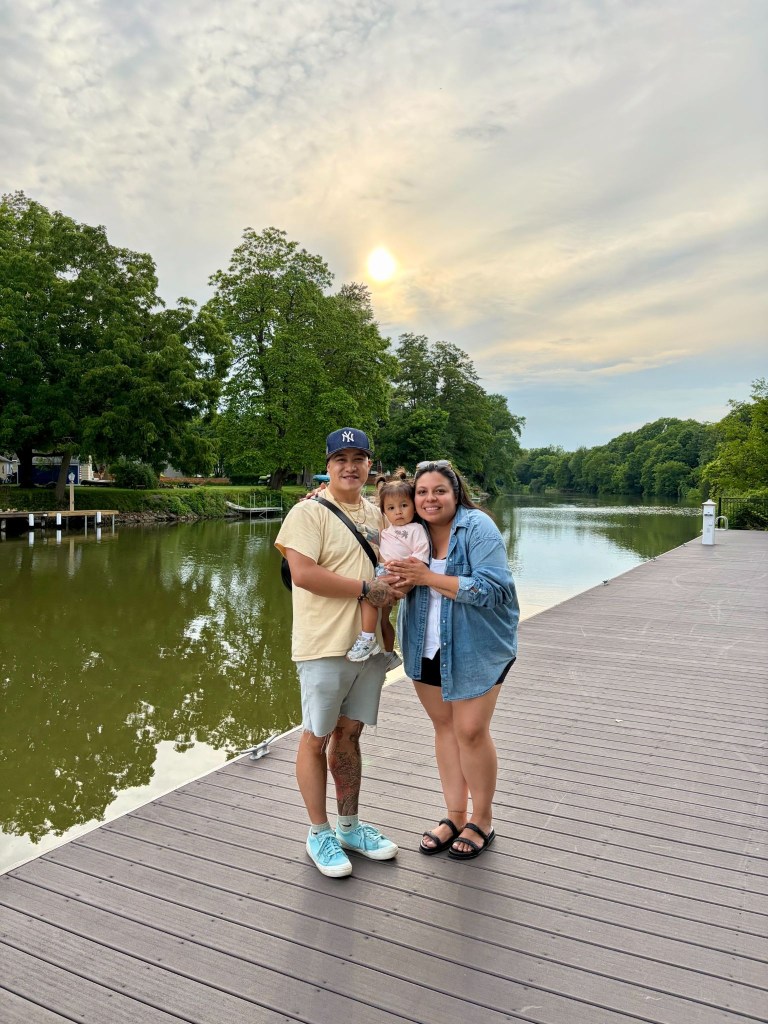
It’s tempting to organize the last several years into a clean timeline: the RV trip led to the house, the house led to hosting, hosting led to the Airstream, the Airstream led to the Casita, the Casita led to Webster. It’s a simple way to tell the story. It’s not how it felt to live it.
Most of the time, it felt like we were just making the best decision we could with the information we had. There wasn’t a master plan or a five-year vision on the wall. There were two people trying to build a meaningful life together, one season at a time. And honestly, we still are. We don’t have this figured out. We’re not sure “figured out” is even the goal.
For a long time I thought Made For Rest was the name of a company I wanted to build. Eventually, Alma and I realized it wasn’t something we were creating. It was something we’d already been living.
When I think back, the milestones aren’t what come to mind first. I don’t immediately think about buying the house, or getting married, or becoming parents. I think about the Strawberry Moon rising over a quiet field. Standing beside a pond saying it can’t get better than this. A hotel room that somehow felt like home. A life packed into a single closet. A little girl waiting outside a bathroom door because she just wanted to be with her mom. Closing a bedroom door and realizing we hadn’t been able to do that in years.
None of those moments felt extraordinary while we were living them. They were simply our life. Maybe that’s the point. The moments that shape us are rarely the ones we announce. They’re the quiet, ordinary ones that only reveal their meaning later.
Made For Rest didn’t begin with a logo, or a website, or even a vacation rental. It began the first time we slowed down long enough to notice something we would have otherwise missed. It’s a reminder to pay attention: to what matters, to the people we love, to the life we’re actually building instead of the one we assume we’re supposed to want.
We’re not trying to hand anyone a finished answer, because we don’t have one. We’re just hoping our story gives you permission to sit with your own for a minute.
So we’ll leave you with the only question that’s ever really mattered to us: what would you notice, if you finally slowed down long enough to look?
 Made For Rest
Leave a comment